

Ever feel like if you want something done right, you have to do it yourself? As leaders and innovators, especially in a fast-paced environment like Chadderton, the temptation to micromanage can be overwhelming. We’ve all been there – drowning in tasks, convinced we’re the only ones who can truly deliver. But what if that instinct is actually holding you and your team back?
The truth is, effective delegation isn’t about offloading busywork. It’s about empowering your team, building trust, and creating a robust, autonomous system – a core principle of Lean thinking. It frees you up to focus on the strategic work that truly moves the needle, rather than getting bogged down in the day-to-day. If you’re dictating every step, you’re not leading; you’re just creating more work for yourself.
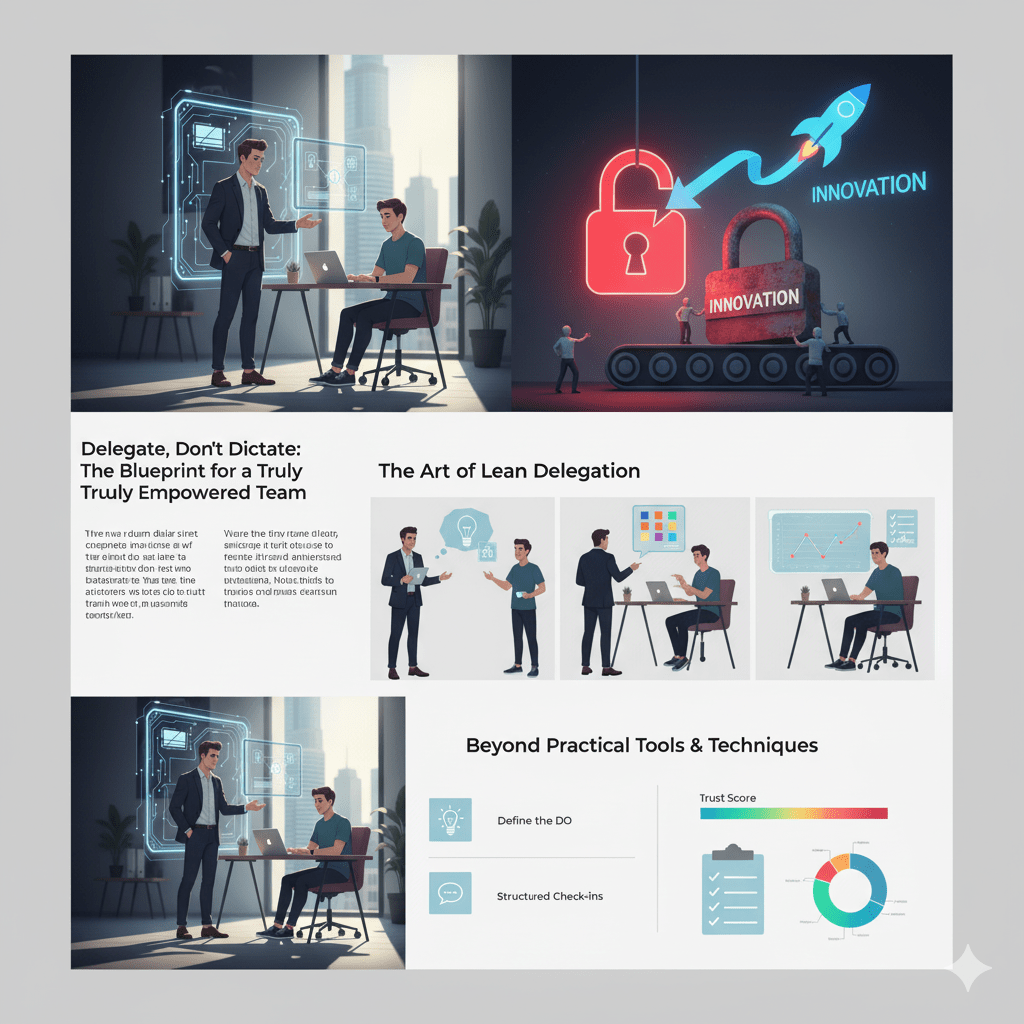
The Trust Deficit: Why Micromanagement is a Design Flaw
Micromanagement isn’t just annoying; it’s a fundamental design flaw in your team’s operating system. When you dictate every step, you:
- Erode Trust: You signal to your team that you don’t trust their capabilities, which inevitably leads to disengagement. Who feels motivated when they’re treated like a pair of hands rather than a thinking mind?
- Stifle Innovation: If every decision needs your sign-off, where’s the room for creative problem-solving? Your team has insights and ideas you might be missing.
- Create Bottlenecks: You become the single point of failure for every process. Your workload multiplies, and projects slow down waiting for your approval. This is pure waste in Lean terms.
- Burn Out Your Best Talent: Capable people crave autonomy. If they don’t get it, they’ll look for it elsewhere.
The Art of Lean Delegation: How to Empower, Not Overwhelm
True delegation is a skill, not a weakness. It’s about defining the what and the why, and trusting your team with the how. Here’s a blueprint for lean, effective delegation:
- Define the “Desired Outcome” (DO): Just like in our “Lean Meeting Manifesto,” start with the end in mind. What is the precise, tangible result you expect? Is it a finished report, a functional prototype, or a validated customer feedback loop? Be crystal clear.
- Example: Instead of “Update the website,” define it as “Launch the new product landing page by Friday, achieving a 10% conversion rate target for sign-ups.”
- Match to Talent, Not Just Task: Don’t just dump work. Consider who on your team has the skills, the desire to grow, or even the potential to learn from this specific challenge. Delegation is a development tool.
- Example: Assigning a new, complex data analysis task to a junior team member who has expressed interest in analytics, providing initial guidance.
- Provide Context & Constraints (Not Solutions): Explain why this task is important and what boundaries exist (budget, timeline, critical dependencies). But resist the urge to tell them exactly how to do it. Let them design the solution.
- Example: “We need to redesign this component to reduce manufacturing cost by 15% without sacrificing quality. How would you approach that, considering our current material suppliers?”
- Offer Support, Don’t Hover: Be available to answer questions and remove roadblocks, but don’t check in every hour. Schedule defined check-in points (e.g., “Let’s touch base on Wednesday afternoon for 15 minutes to review progress”).
- Embrace the 70% Rule: If someone on your team can do the task 70% as well as you can, delegate it. That 30% gap is where they learn, grow, and eventually exceed your own capabilities. Your role is to foster that growth.
Beyond Practical Tools & Techniques
Beyond the steps above, consider these lean tools to enhance your delegation:
- The “Trust Score”: For each task you delegate, implicitly assign a “Trust Score” from 1-5 (1 = walk me through every step, 5 = just tell me the desired outcome). As your team member grows, this score should increase, signaling more autonomy.
- Kanban Boards for Task Visibility: Use a Trello, Asana, or even a physical whiteboard to visualize delegated tasks. This creates transparency, helps individuals manage their workload, and allows you to quickly see progress without having to ask for updates constantly.
- Structured Check-ins (Not Micro-managing): Instead of random “how’s it going?” messages, schedule brief, focused check-ins. “What challenges are you facing?” “What support do you need?” “Are there any obstacles I can remove?” These questions foster problem-solving, not reporting.
Real leadership isn’t about carrying the heaviest load; it’s about building a team capable of carrying any load. It’s about designing a system where innovation can flourish, and where every member feels empowered to contribute their best. Ditching the dictate for true delegation isn’t just good for your team; it’s essential for your own growth as a leader.
#Leadership #Management #Delegation #Teamwork #Productivity #LeanThinking #Empowerment #BusinessGrowth #LeanitintoDesign
And with all that said, I’m off to delegate my to-do list. After writing this, I’ve realised that half the tasks I’m holding onto should have been given to someone else a week ago. Looks like the doctor needs to take their own medicine sometimes. If you see me trying to do everything at once, feel free to send me a link to this very blog post
 LeanintoDesign
Leave a comment