

If someone had asked me twelve months ago whether Artificial Intelligence would become part of my day-to-day engineering toolkit, I’d probably have been sceptical. Like many engineers, I saw AI as an interesting technology capable of writing emails or answering questions, but I couldn’t see how it would genuinely improve engineering. I couldn’t have been more wrong.
Over the last few months I’ve deliberately integrated AI into almost every aspect of my role as Engineering Manager at Whitham Mills Engineering—not to replace engineering judgement, but to improve how engineering is delivered. The result has been one of the biggest productivity improvements I’ve experienced in my career.
Engineering Management Is More Than Design
My role isn’t simply producing CAD models. Every week involves balancing:
- Engineering design
- Capacity planning
- Project management
- Manufacturing support
- Health & Safety
- Risk Assessments
- Technical documentation
- Standards compliance
- Continuous improvement
- Digital transformation
Each of those generates huge amounts of information. Historically, much of that knowledge stayed in emails, notebooks, spreadsheets or inside people’s heads. That isn’t sustainable. AI has allowed me to start connecting all of those disciplines together.
Tackling My Biggest Digital Engineering Project
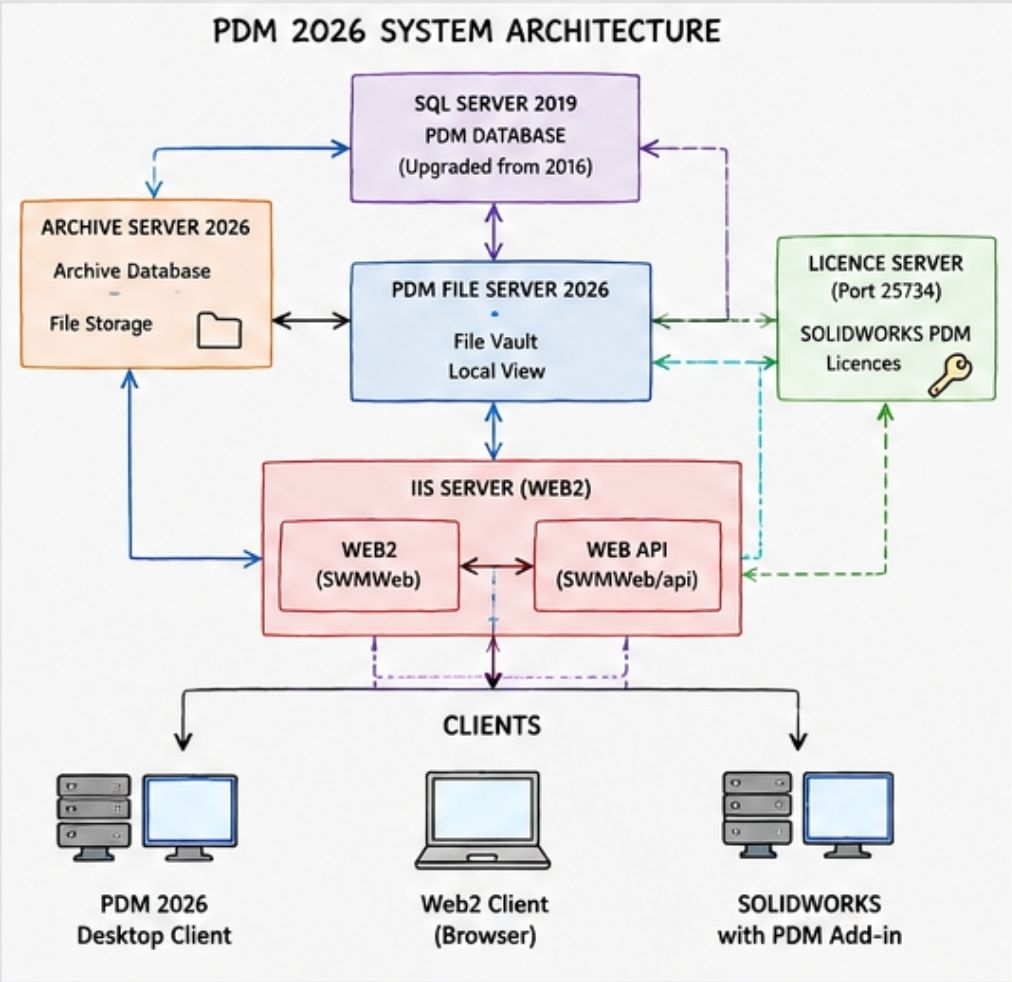
One of the largest projects recently has been upgrading our SOLIDWORKS and PDM environment from 2024 to 2026. Although I’ve successfully managed Autodesk Inventor and Vault upgrades at multiple companies throughout my career, this was my first SOLIDWORKS PDM upgrade. Anyone who has worked with engineering infrastructure knows these projects aren’t simply clicking “Next” on an installer.
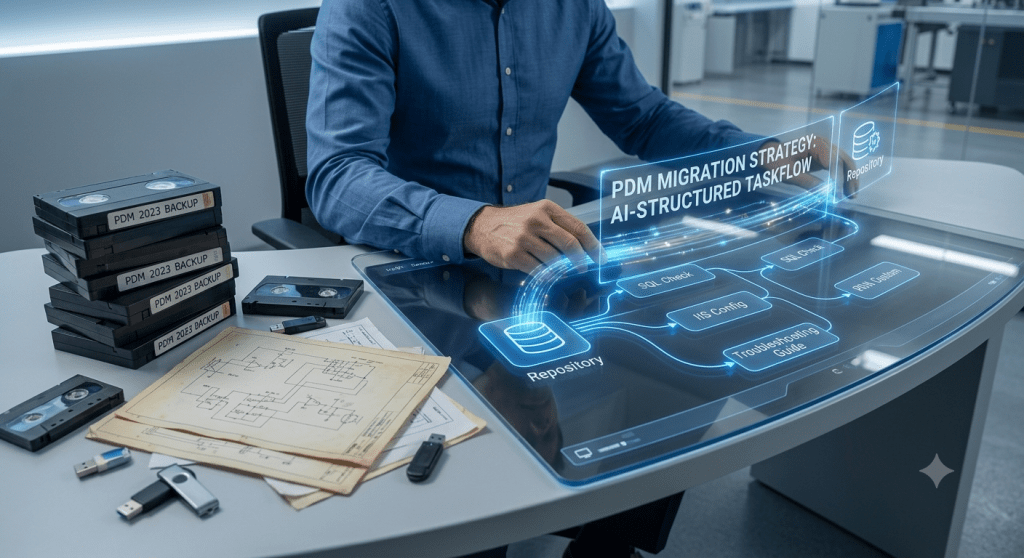
The project involved:
- SQL Server validation & Database integrity checks
- Archive server verification & Licence management
- Client deployment & IIS / Web2 configuration
- Security permissions & Version compatibility
- Backup validation & Disaster recovery planning
- Testing every engineering workstation
Naturally, things didn’t go entirely to plan. I encountered authentication issues, service permission problems, preview failures, HTTP 500 errors, .NET compatibility issues and various client configuration challenges. Instead of searching hundreds of forum posts each time something went wrong, I worked alongside AI to build a structured upgrade methodology before we even started.

By the end of the project I hadn’t just completed an upgrade. I had created a repeatable engineering process that should significantly reduce risk during future upgrades—including pre-upgrade planning, validation checklists, and recovery documentation.
Reinventing How I Manage Engineering Information
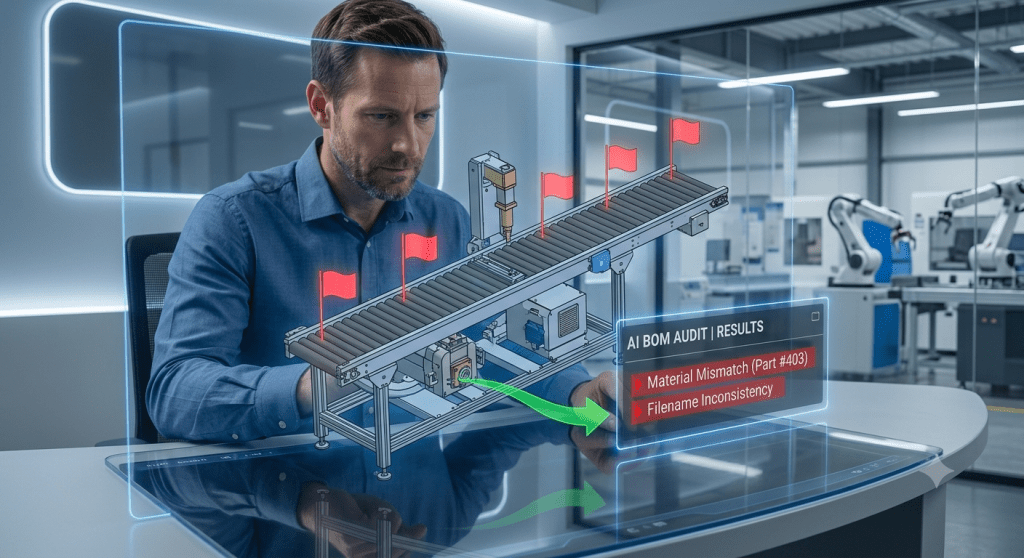
Another area I’ve focused heavily on is engineering data quality. Poor information costs manufacturers thousands of pounds every year. I’ve been investigating PDM metadata inconsistencies, BOM accuracy, assembly synchronisation, material property issues, and filename auditing.
Rather than manually checking thousands of files, AI helped develop structured auditing processes, macros and reporting methods that identify inconsistencies automatically. Instead of fixing individual problems, I’m improving the system that creates the problems.
I did all this with AI support, and it’s something I wouldn’t have been able to do in previous employment because the use of AI was stunted and frowned upon.
Modernising Risk Assessments
Health & Safety has also become a major development area. Over recent months I’ve been redesigning our engineering risk assessment process to produce documentation that is easier to complete, more consistent, better aligned with UK legislation, and more useful for project teams.
Rather than treating risk assessments as paperwork completed at the end of a project, the aim is to integrate safety throughout the design process. I’ve reviewed machine guarding, trap key systems, conveyors, and isolation procedures while creating reusable engineering standards that can be applied across future projects.
Better Visibility Across Engineering
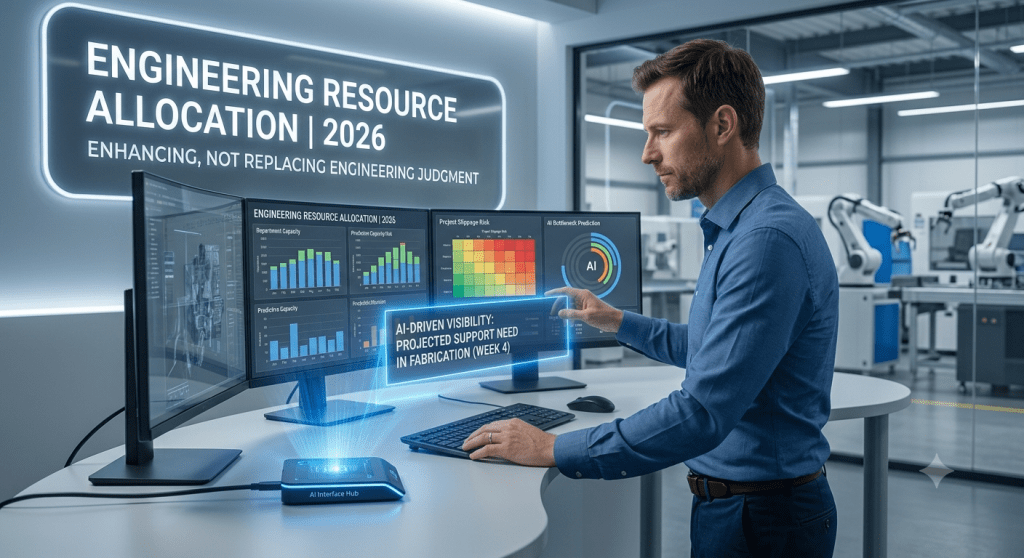
Capacity planning has traditionally relied on spreadsheets and experience. I’ve been developing dashboards that combine engineering workload, Planner data and operational reporting to answer simple but important questions: Who has capacity? Where are the bottlenecks? Which projects are slipping?
Instead of reacting to problems after they happen, I’m building systems that allow us to see them developing.
AI Has Changed How I Write Technical Documentation
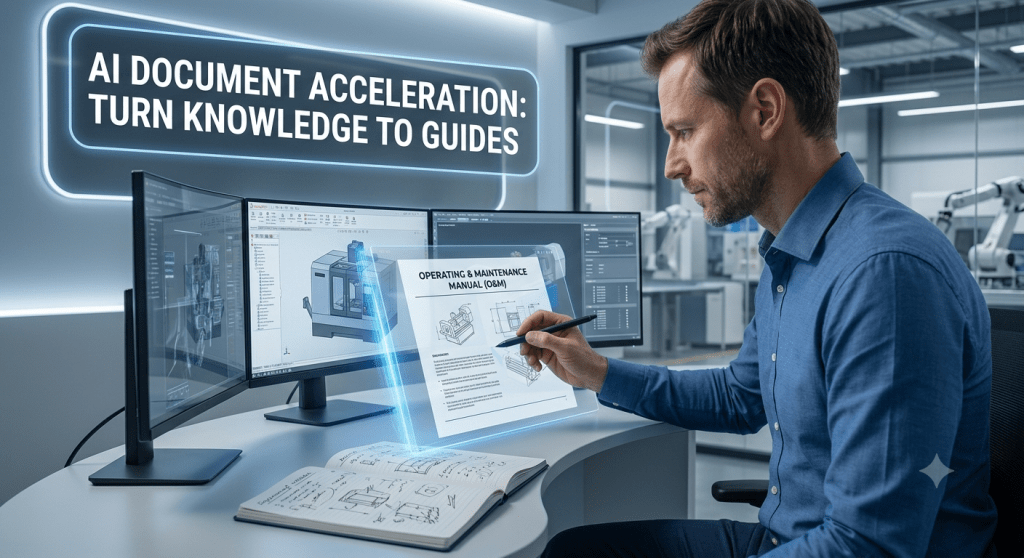
One unexpected benefit has been documentation. Anyone working in engineering knows documentation often becomes the task everyone postpones. Recently AI has helped develop Operating & Maintenance Manuals, Method Statements, Training documentation, and CAD standards.
The important point is that AI doesn’t replace technical knowledge. It accelerates turning that knowledge into high-quality documentation. Every document still requires engineering review. But instead of spending hours formatting or structuring information, more time can be spent validating technical content.
AI Is Also Making Me A Better Project Manager
Perhaps the biggest surprise has been how useful AI has become for project management. It naturally encourages breaking complex problems into manageable tasks, recording assumptions, identifying risks, and standardising processes. Those are all characteristics of good project management.
The technology hasn’t made engineering easier. It has made engineering more organised.
The Human Still Makes The Decisions
One misconception I hear regularly is that AI is replacing engineers. That hasn’t been my experience.
- AI doesn’t know my customers.
- It doesn’t understand the practical compromises made during manufacture.
- It doesn’t take responsibility for compliance.
- It doesn’t sign off designs.
What it does brilliantly is remove much of the administrative burden that prevents engineers spending time solving engineering problems. The judgement remains entirely human.
Looking Ahead
The work over the last few months has fundamentally changed how I approach engineering management. Instead of asking: “Can AI do this?” I’m now asking: “How can AI help me deliver engineering better?”
Sometimes the answer is technical documentation, project planning, troubleshooting, or helping structure complex engineering decisions. The common thread is that AI isn’t replacing engineering expertise. It’s helping capture, organise and apply that expertise more effectively than ever before.
For me, that’s where the real opportunity lies. Engineering has always evolved through better tools. AI is simply the next tool—provided we learn how to use it properly. And if the last few months have taught me anything, it’s that I’m only scratching the surface of what’s possible.
What are you doing with AI and how is it helping or hindering your role?


Leave a Reply