
Walk into a project delivery office anywhere in the UK—from Whitehall civil departments to Midlands precision manufacturers—and you will inevitably find three rival camps arguing over their credentials. In one corner sits the PRINCE2 crowd clutching stage-gate control forms. In another stands the APM brigade holding broad chartered competence matrices. In the third sits the PMI cadre, running on systemic performance domains.
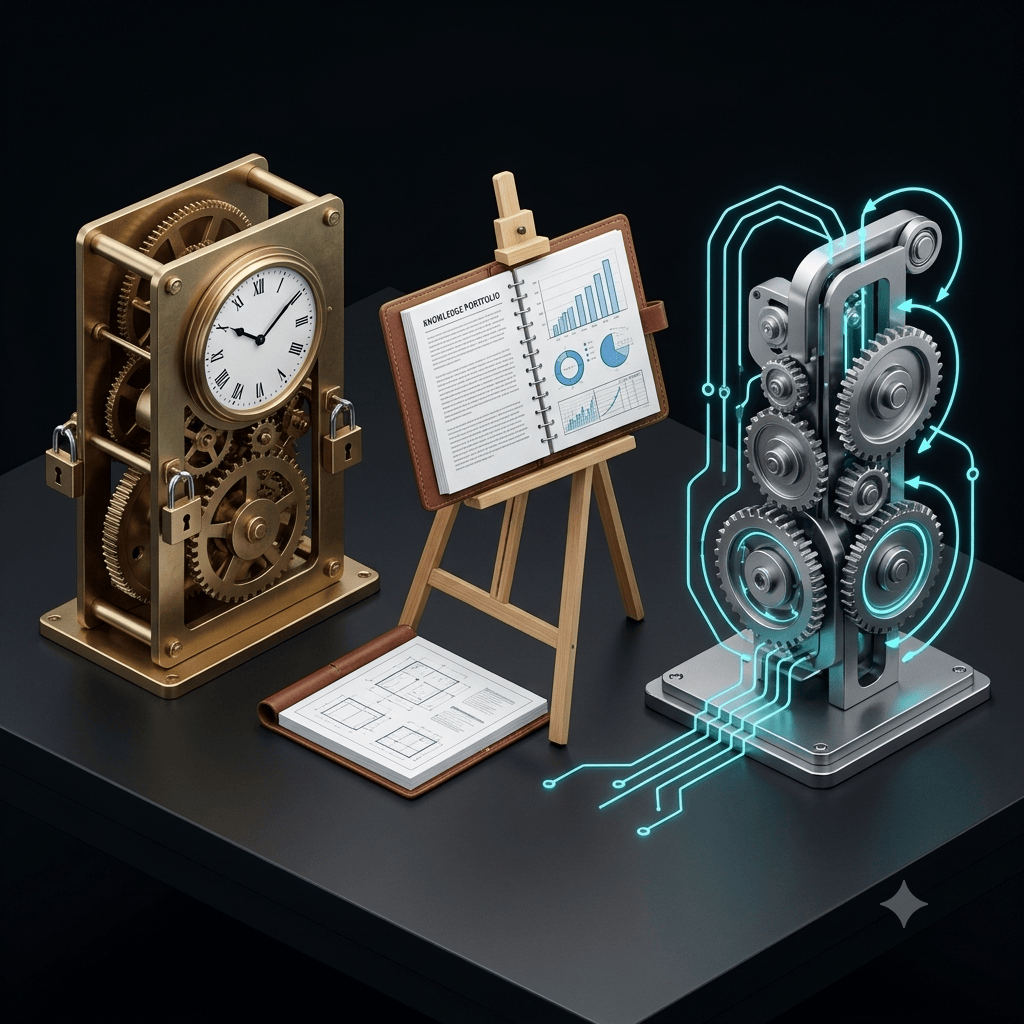
Most industry commentary treats this as an alphabet soup exam choice. That completely misses the point. The difference between PMI, PRINCE2, and APM is not what acronym sits on your business card; it is how each framework conceives the operating physics of delivery.
PRINCE2: The Defensive Bureaucracy
PRINCE2 was forged inside the UK public sector. Structurally, it is designed for administrative control and risk transfer. It answers one core question: Are we legally and procedurally authorised to spend the next tranche of capital?
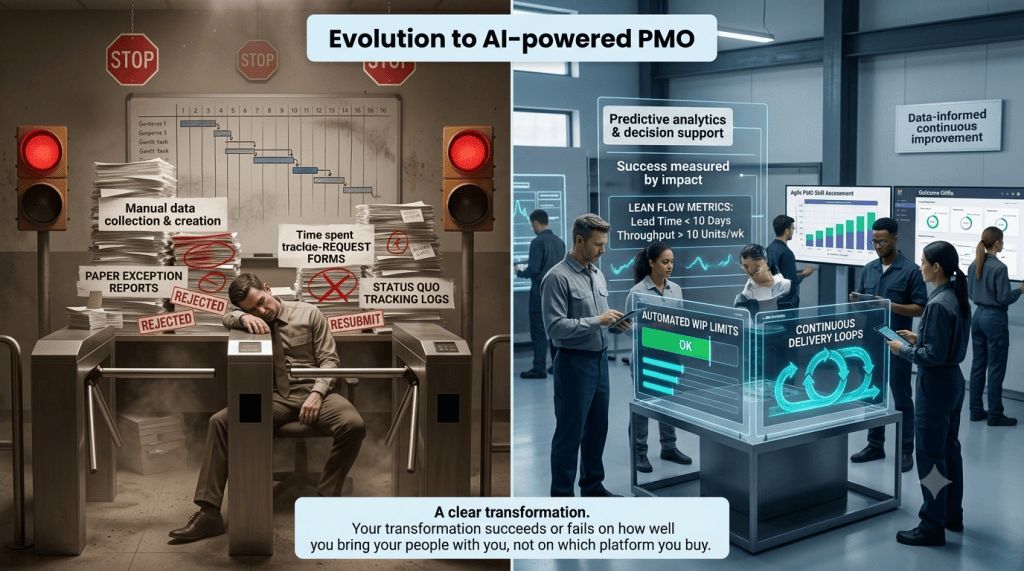
Its seven principles—continued business justification, managing by exception, and predefined stages—provide reliable contract hygiene. But when a project hits dynamic operational turbulence, PRINCE2 often morphs into pure bureaucratic friction. Teams freeze midway through a sprint waiting for project board sign-offs. Stage boundaries turn into political barricades where no one touches a spanner or commits a line of code until an exception report is cleared. It is great for establishing audit trails; it is terrible for rapid engineering iterations.
APM: The Academic Capability Matrix
The Association for Project Management (APM) serves as the chartered body for the profession in the UK. The APM Body of Knowledge excels at defining what a well-rounded practitioner ought to know, from interpersonal leadership to foundational planning techniques.
The limitation? APM is knowledge-led rather than an engineered delivery system. It offers a broad menu of competencies, but leaves the operational plumbing—how you wire data pipelines, integrate configuration baselines, or connect predictive schedules to iterative backlogs—entirely to your discretion. It tells you what skills to hold, but provides little tactical architecture for building the assembly line.
PMI: The Engineered System of Value Delivery
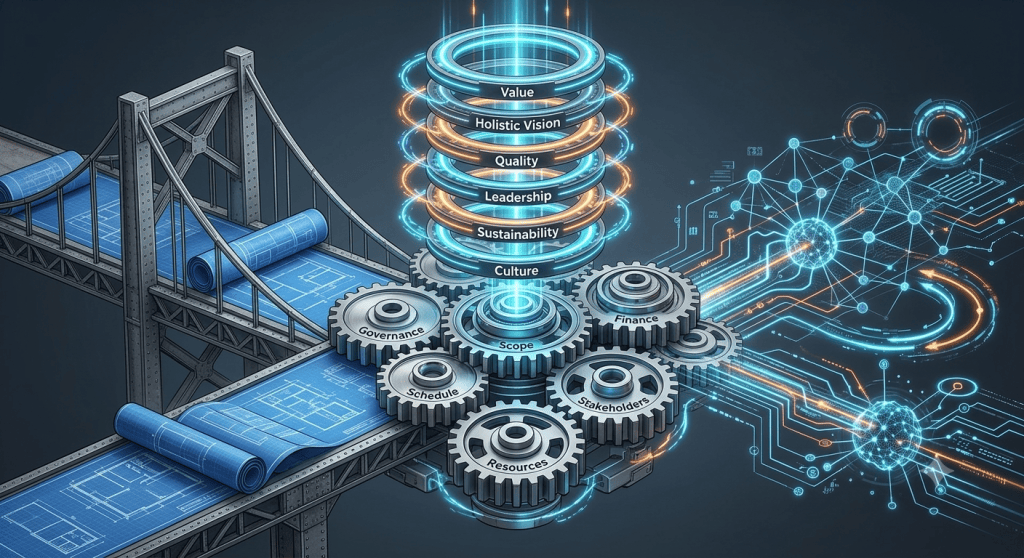
While competitors focus on governance stages or individual competence, the modern PMI framework—anchored by the PMBOK® Guide Eighth Edition and Organizational Project Management (OPM)—treats project execution as an integrated value system. It deliberately strips away procedural dogma in favour of six actionable principles: adopt a holistic view, focus on value, embed quality into processes and deliverables, be an accountable leader, integrate sustainability, and build an empowered culture.
Instead of locking teams into rigid linear stages, PMI maps work across seven core performance domains—governance, scope, schedule, finance, stakeholders, resources, and risk. It gives you the structural jigs (Critical Path scheduling, Earned Value metrics, and strict Configuration Baselines) while remaining completely agnostic about whether execution happens via predictive gates, agile sprints, or a hybrid continuum.
The Verdict for Lean Leaders
If your organisation’s primary objective is defensible paperwork and compliance air-cover, PRINCE2 will keep your audits clean. If your objective is institutional benchmarking across UK chartered standards, APM establishes your professional baseline.
But if your goal is eliminating administrative waste, accelerating operational flow, and integrating advanced tooling like AI workflows and sustainability metrics without grinding delivery to a halt, PMI provides the systemic engine to build it.
Put It to the Test
Look at your project office this week: are your governance gates actually protecting value, or are they just slowing down decisions while teams fill in stage-boundary forms? Which framework dominates your shop floor, and where does it fail first? Drop your take below.


Leave a Reply